Earthquake 101
Earthquakes can strike without warning and cause serious damage to your home, from structural failures to cracked foundations and everything in between. Whether you’re weighing the risks, exploring coverage options or preparing your property, knowledge is the best foundation for protection.
In Earthquake 101, we have gathered the essential insights every homeowner should know about seismic risk and earthquake insurance, so you can protect your home and financial future.
What Is an Earthquake?
An earthquake is a sudden shaking of the ground caused by the movement of Earth’s tectonic plates. These movements release energy that can damage structures and lead to costly repairs if your home isn’t properly covered or reinforced.
Why Earthquake Insurance Matters
Homeowners insurance typically does not cover earthquake damage. That means if your home is damaged due to seismic activity, you would be responsible for repairs and rebuilding costs. Unless you have a dedicated stand-alone earthquake insurance policy or an earthquake endorsement your home is not covered for earthquake damage.
Here’s how earthquake insurance helps:
- Financial protection: Covers repairs or rebuilding costs after an earthquake.
- Peace of mind: You won’t have to pay out of pocket for major damage.
- Living expenses: Helps cover additional living costs if your home becomes temporarily uninhabitable.
- Personal property coverage: Protects belongings inside your home.
What Earthquake Insurance Covers
Different policies vary, but most include the following key coverage areas:
- Dwelling Coverage: Protects the structure of your home and attached features, from walls and roofs to foundation repairs.
- Other Structures: Covers detached elements on your property, like sheds or garages.
- Contents / Personal Property: Reimburses for damaged belongings inside your home.
- Loss of Use / Additional Living Expenses: Pays for temporary housing and living costs if your home becomes unlivable.
- Building Code Upgrades: Helps cover costs required to meet current building codes when rebuilding.
- Loss Assessment: Provide protection if you’re responsible for a portion of damage or loss in a common area shared with other property owners.
Common Earthquake Insurance Terms Explained
- Deductible: This is often expressed as a percentage of your home’s insured value (e.g., 10%). GeoVera offers earthquake insurance with a broad range of deductibles. The deductible is the amount that will be subtracted from your payout when you have a claim for earthquake damage.
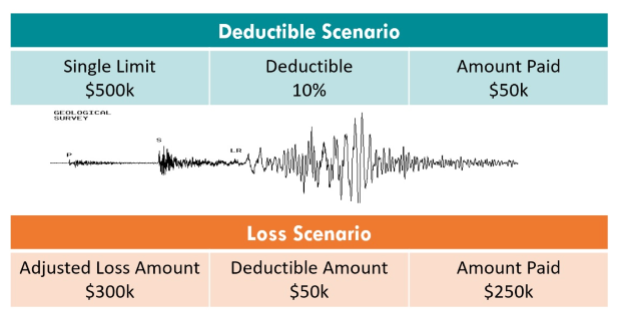
- Flex Limit vs. Single Limit: Some policies offer separate coverage limits for dwelling, structures and belongings (Flex), while others apply one combined limit for everything (Single).
- Retrofit Discount: Some policies offer discounts if your home has been reinforced to better withstand shaking.
Earthquake Planning & Preparation Tips
Even with insurance, preparation builds resilience:
- Secure heavy furniture and appliances: To reduce damage and injury risk during shaking.
- Create an emergency kit: With food, water, flashlights, and first-aid supplies.
- Drop, Cover & Hold On: Practice this earthquake safety drill with your family.
- Plan escape routes: Also, identify safe zones in each room of your home.
How to Choose the Right Earthquake Insurance
Here’s how to evaluate your options:
- Check coverage limits and deductibles: know what’s included and what’s not.
- Consider cost vs. risk: areas with higher seismic activity may see higher premiums but also higher potential damages.
- Ask about retrofit discounts: if you’ve strengthened your home.
- Review claim support: understanding how your provider helps you after a quake is critical.
Next Steps
Earthquakes are unpredictable, but your financial protection doesn’t have to be. Learn more about your options and get a customized quote to find the right earthquake coverage for your home.